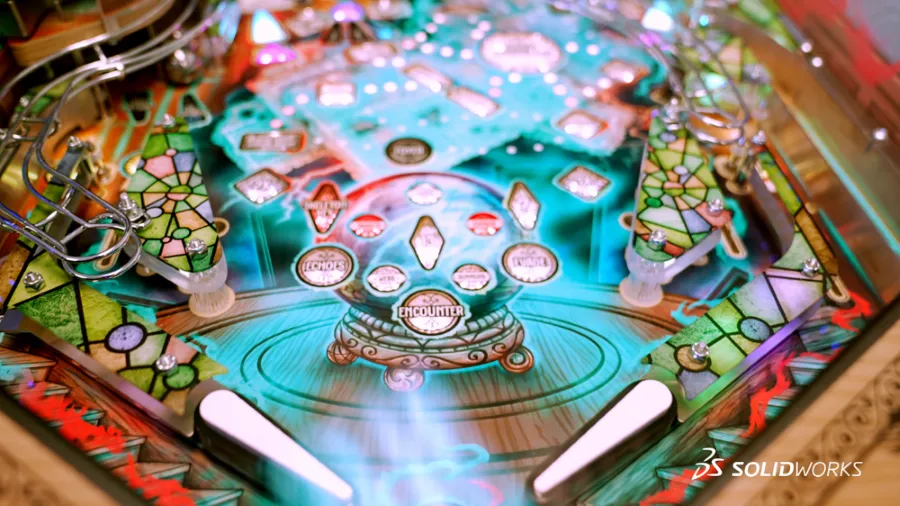
Barrels of Fun Crafts Custom Pinball Machines from the Ground Up
Specialty pinball manufacturer speeds imaginative mechanical concepts into production-ready hardware with SOLIDWORKS Design.
Challenge
Integrate thousands of in-house and vendor-designed mechanical components within a tightly constrained playfield, identifying and resolving interference and clearance conflicts early in development.
Solution
Use SOLIDWORKS Design to transition from hand-built foam core and cardboard mockups to digital development.
Results
- Eliminated virtually all fitment issues early in the design process
- Faster prototyping cycles, often same-day when modeled digitally
- Fewer physical prototypes required before production
- Improved first-time manufacturability from digital models
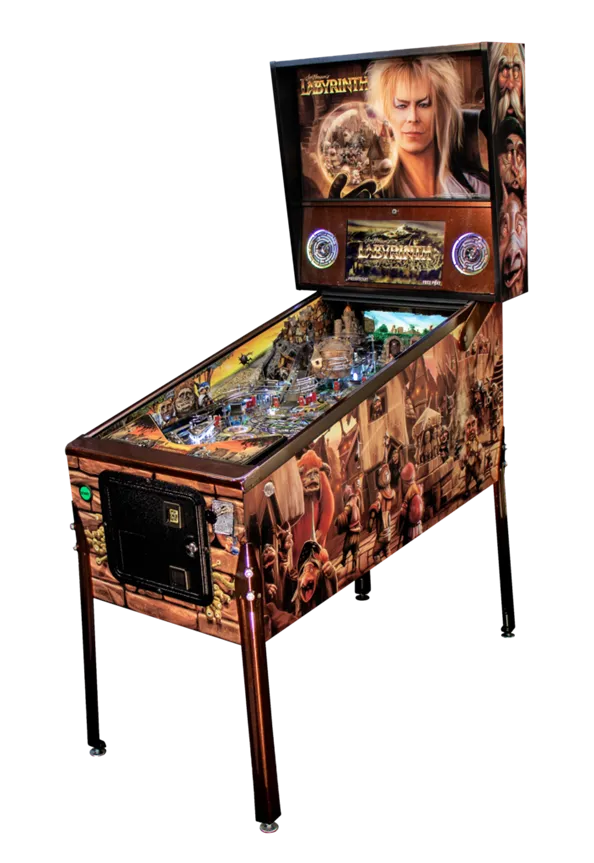
Barrels of Fun builds limited-run, bespoke pinball machines based on well-known films and fictional worlds such as “Dune” and (Muppet creator) Jim Henson’s “Labyrinth.” As CEO and Designer David van Es explains, the Barrels of Fun team does not engineer a generic pinball platform and later apply a theme through artwork and sound. Instead, each project begins with a close analysis of the story, characters, settings, and iconic scenes. Those elements are translated directly into the machine’s gameplay rules and physical architecture (including ramps, targets, moving mechanical features), lighting effects, and sound design, so from the outset the intent is creating a playing experience that reflects the story.
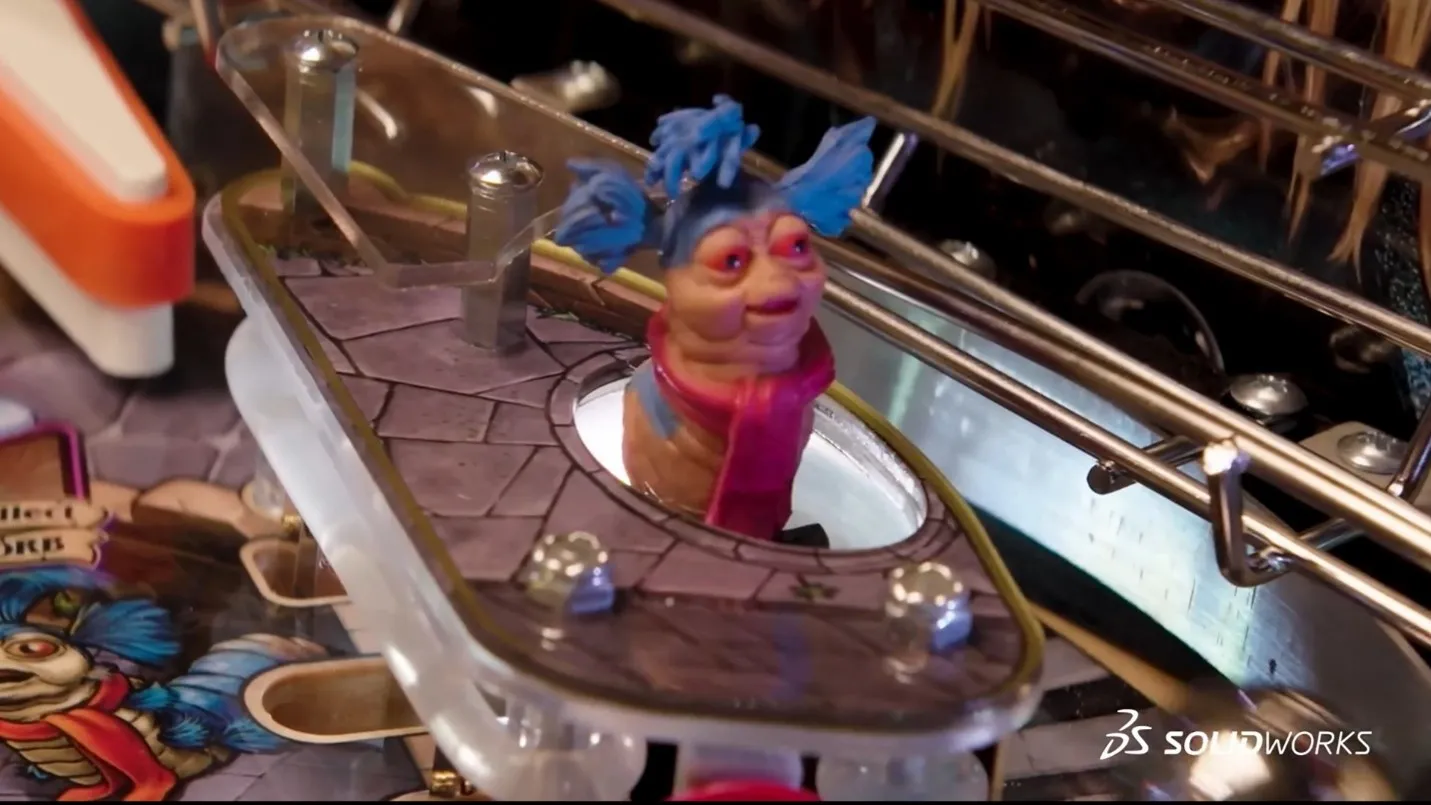
Having started in pinball amusement in Australia when he was 16, van Es built his first game in his dining room. His passion remains creating world-class products from the company’s current Houston, Texas location. “When we choose an intellectual property (IP), we don't create a play field and then stick an IP on it. We literally start from scratch every time,” explains van Es. For the company’s “Labyrinth” game, that meant ensuring “the heads would pop up on the play field” and that a ball could be captured in “a physical lock so when you hit it, it actually would pop off the head. Just like in the movies.” Delivering that level of mechanical storytelling requires considerable expertise and coordination.
Barrels of Fun Manufacturing Specialist Paul Salisz notes that many people assume pinball machines are simple [to design and build], but in reality they are incredibly intricate and complex. What appears straightforward from the outside actually involves numerous components and a high level of detailed engineering and assembly.
Related Resources
Having SOLIDWORKS allows us to speed up very quickly. If we have a design in SOLIDWORKS, we can have it prototyped by the end of the day, most of the time.
Coordinating Thousands of Components
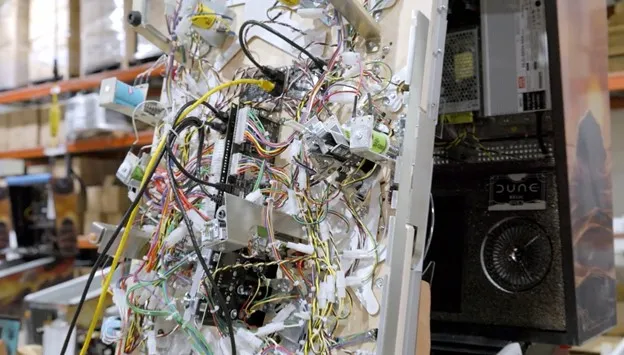
A modern pinball machine is a tightly packed mechanical system. Prototype Engineer Luke Underwood describes the scale of the coordination problem: “The biggest challenge I think, is making everything mesh. There are thousands of components [designed in house and by] many different vendors, and lots of materials. It's really hard to combine everything.”
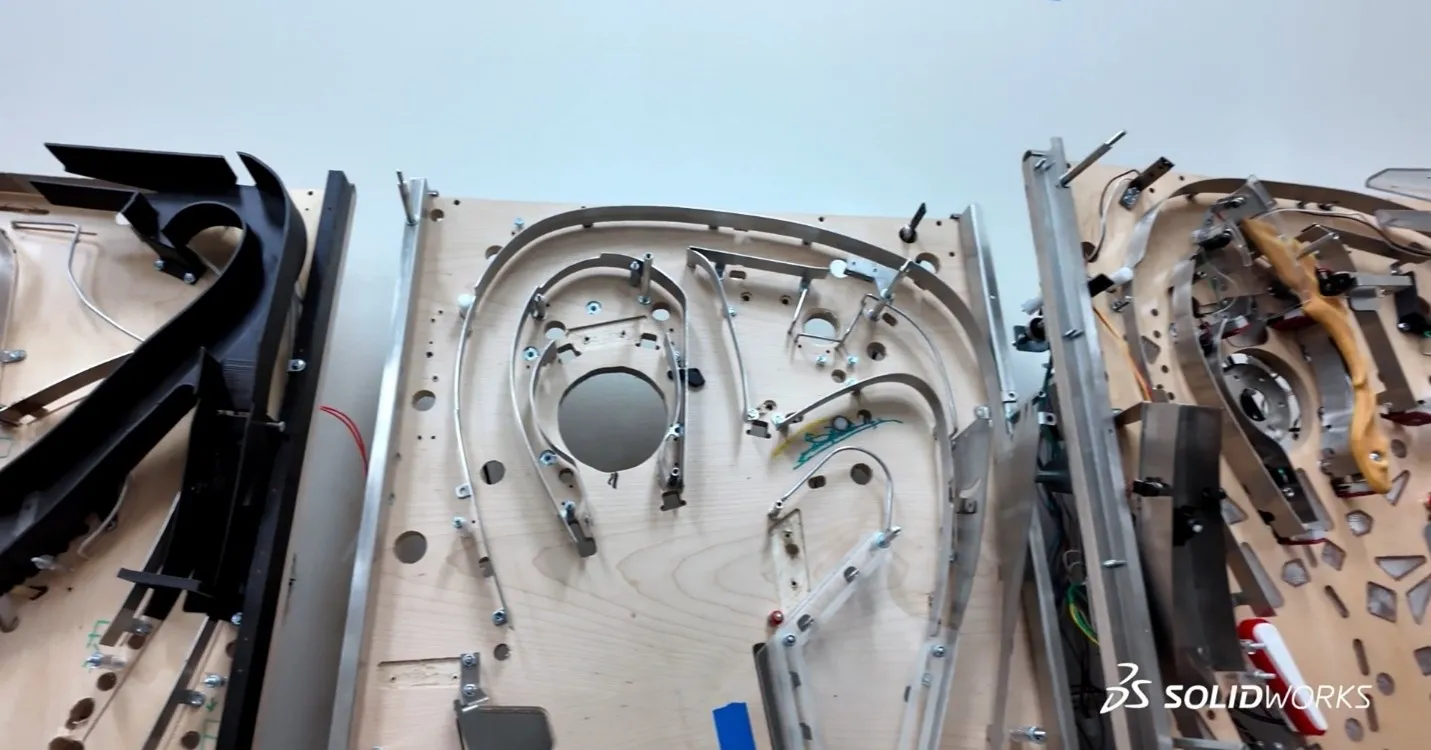
In the company’s early days van Es’s hand-built prototypes clarified how the game played and whether it worked as intended. He used Adobe® Illustrator, foam core, and cardboard to build the physical whitewoods [prototypes]. “We usually built six or seven whitewoods, but we’d build as many as it takes to get it right,” he notes. However, numerous mechanical conflicts would not be visible until after several prototype iterations had already been built, which created a most time-consuming process.
Digital Fit Before Physical Build
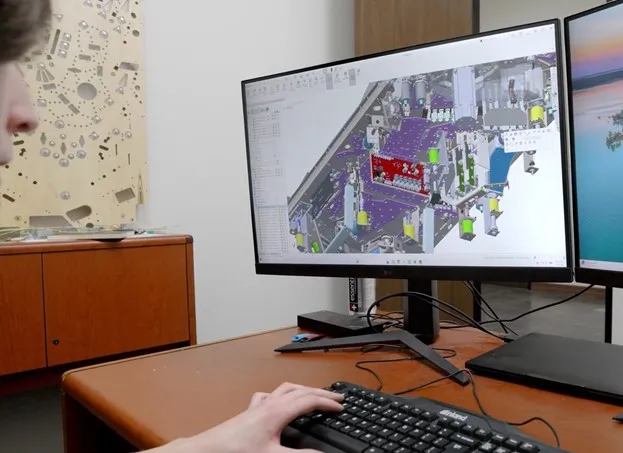
SOLIDWORKS® Design introduced a faster, more controlled digital workflow. When components are assembled and moved in context within SOLIDWORKS, the software immediately identifies where parts collide, van Es explains. Using built-in collision detection and interference checking tools, the system highlights overlapping geometry and flags physical conflicts that would prevent parts from fitting or moving correctly in the real world.
This capability fundamentally changed the team’s approach to iteration. Instead of discovering clashes during physical prototyping, they could detect and resolve interferences within the 3D model, enabling the team to adjust clearances, refine motion paths, and validate mechanical relationships before anything was built. The result was fewer surprises, tighter mechanical integration, and a more efficient path to a functioning design.
Speeding Product Development
Van Es adds, “With SOLIDWORKS, we actually find ourselves doing fewer prototypes because we can see a lot of the errors that will pop up that you wouldn't even see until we produced four or five whitewoods.”
For manufacturing, the reliability of the models became fundamental. Salisz states, “Everything that I do, if it works in SOLIDWORKS, 99% of the time I can make it, form it up, and it fits onto the play field wherever we need it.” As a result, “Prototyping—instead of doing it 10 times, you do it once or twice and you're done. That makes a huge difference.” Van Es continues, “Having SOLIDWORKS allows us to speed up very quickly. If we have a design in SOLIDWORKS, we can have it prototyped by the end of the day, most of the time.”
From Concept to Production with Fewer Iterations and Greater Creativity
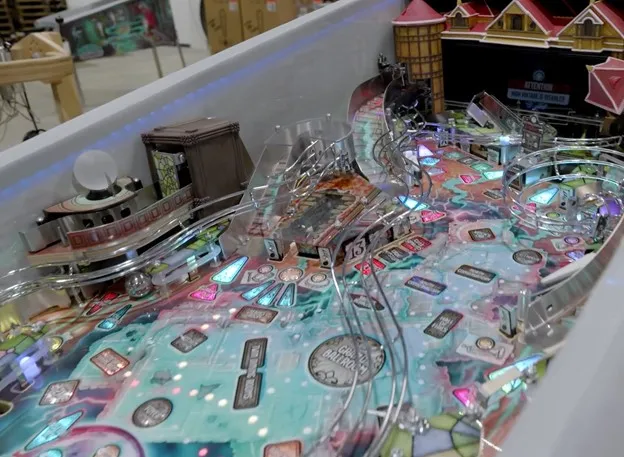
By resolving interferences digitally, Barrels of Fun reduced reliance on late-stage whitewood prototypes. By modeling assemblies before fabrication, the team is more secure that parts will fit as intended, which enables them to move confidently from design to prototype.
With mechanical conflicts (as noted earlier), the team can concentrate on player experience. Van Es affirms, “It allows us to be more creative because we don't have to worry about everything else. Now [with SOLIDWORKS] we can really focus on how to tell a unique story moment on the pinball play field.”
Play it Again, Sam
For Barrels of Fun, engineering discipline supports creative ambition. Digital modeling in SOLIDWORKS Design enables the team to align thousands of components, reduce the number of physical iterations, and move more quickly from concept to manufacturable assemblies. The result is a process where mechanical precision underpins emotional engagement and results in the definition of success as defined by Barrels of Fun: “They play one game and they want to play it again,” enthuses van Es.
Products:
- SOLIDWORKS Standard
- SOLIDWORKS Professional
Learn More About SOLIDWORKS
Have questions about SOLIDWORKS Solutions?
SOLIDWORKS solutions enable you and your team to quickly transform new ideas into great products.