What is 3D CAD Design & Modeling Software?
Discover how 3D CAD software improves precision and teamwork, and how SOLIDWORKS Design can transform your workflow.
SOLIDWORKS
Carlos Reyes, a SOLIDWORKS Creator and Maker and electromechanical engineer, translates pop culture concepts into manufacturable, full-scale structures using SOLIDWORKS Design.
Transform imaginative concepts into full-scale, physically functional builds, including a human-sized Poké Ball and a Spider-Man Green Goblin-inspired glider.
SOLIDWORKS Design enables the creation of parametric 3D models that can be iterated, mirrored, and refined into manufacturable geometries.
In engineering, the gap between concept and physical reality is where most ideas fail. Geometry must become structure. Materials must behave as expected. And fabrication constraints impose limits that digital concepts alone cannot resolve.
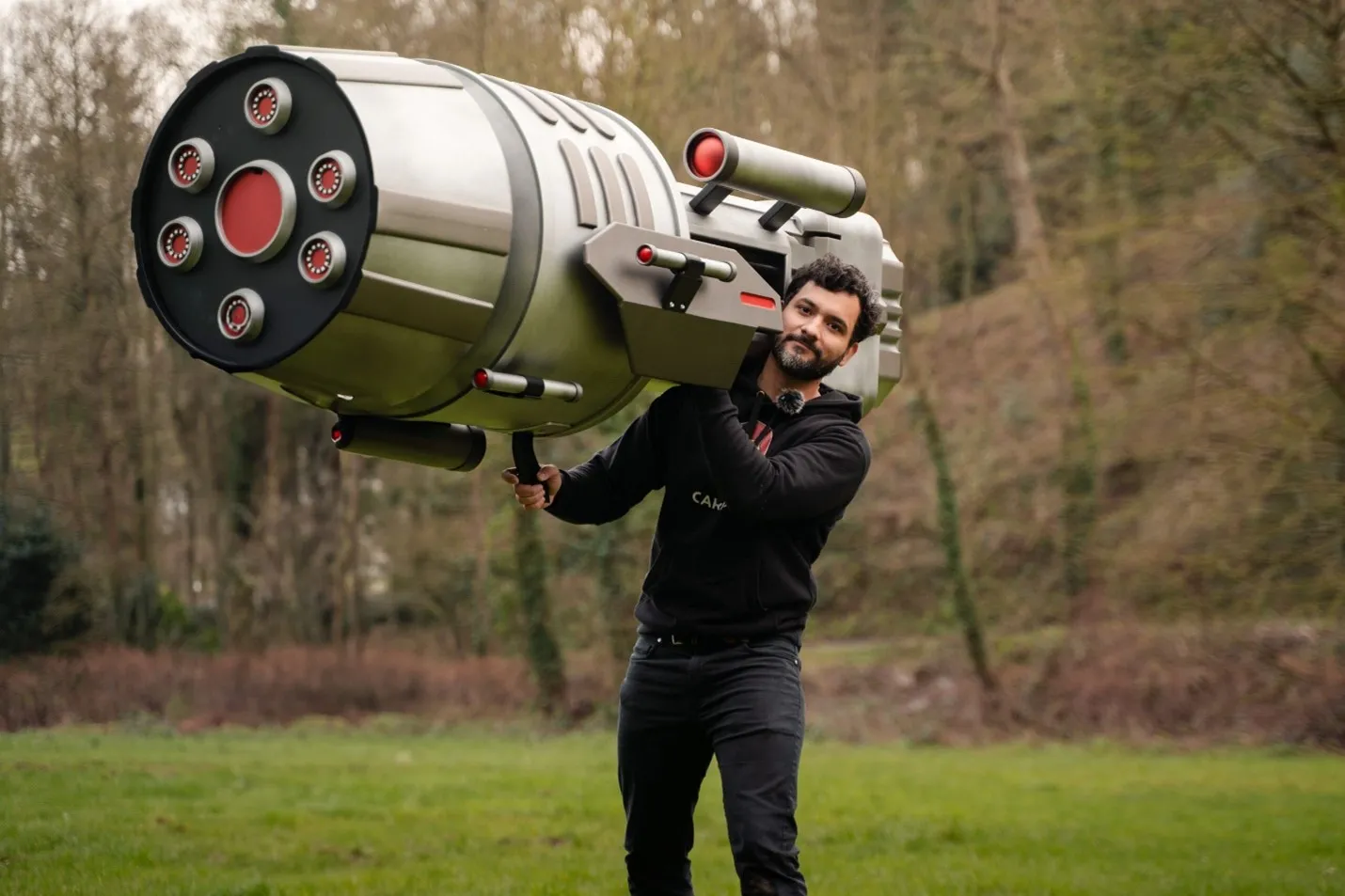
For Carlos Reyes, an electromechanical engineer and SOLIDWORKS® content creator known as Carlos3D, this gap is the work itself. His projects include Poké Ball, Iron Man armor, and Proton Cannons, which all require more than creativity. They demand disciplined modeling, iterative validation, and a willingness to confront physical constraints early in the design process. As Reyes explains, “What starts in my head becomes real. SOLIDWORKS is the tool I use to express that.”
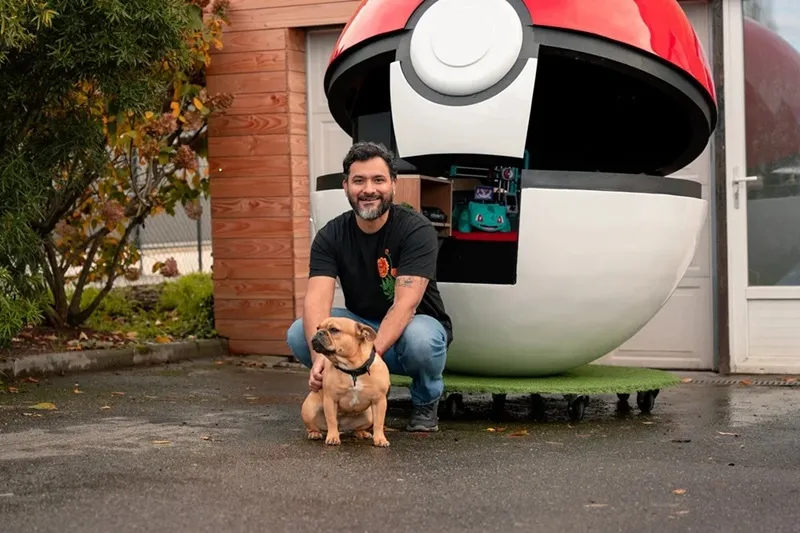
Reyes’ projects begin with open-ended questions that quickly become engineering problems. A sphere large enough for a person to fit inside introduces spatial constraints, structural requirements, and material tradeoffs. Even seemingly simple geometry becomes complex at scale.
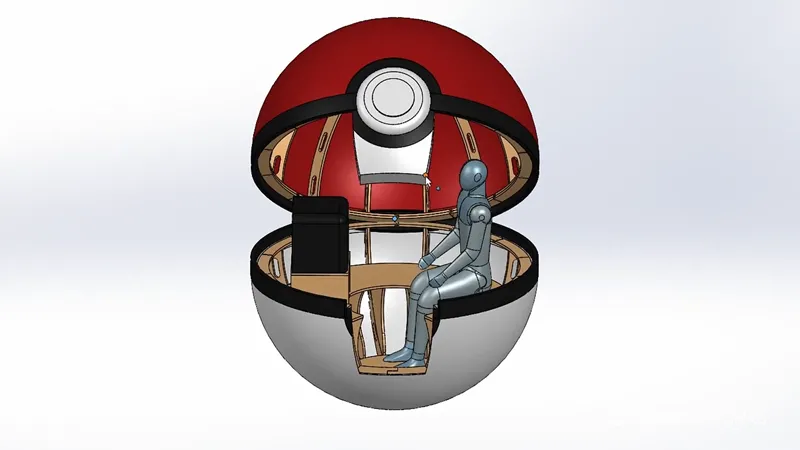
A spherical structure like the Poké Ball required segmentation into repeatable components, each with consistent curvature and alignment. Early assumptions about materials proved insufficient. For example, wood’s flexibility required additional supports, while the structure covering exposed limitations in achieving a smooth surface.
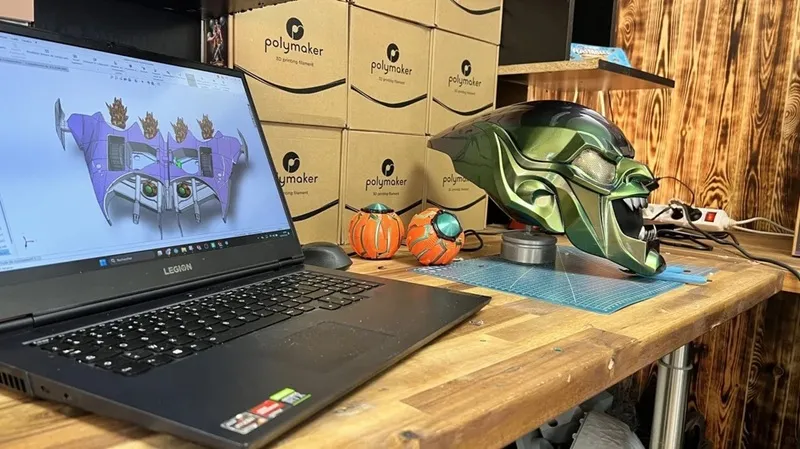
Similarly, for a re-creation of the Goblin glider (used by a supervillain who is Spider-Man’s nemesis), translating a stylized, fictional object into a physical build required defining curves, edges, and proportions that matched the visual intent while remaining manufacturable.
Both projects required continuous reconciliation between design intent and physical feasibility.
Discover how 3D CAD software improves precision and teamwork, and how SOLIDWORKS Design can transform your workflow.
SOLIDWORKS
Discover SOLIDWORKS Design, the industry-standard 3D CAD software with cloud collaboration, secure file management, and AI-powered features.
SOLIDWORKS
What starts in my head becomes real. SOLIDWORKS is the tool I use to express that.
Reyes used SOLIDWORKS Design as the central environment to define geometry, test concepts, and prepare for fabrication. For the Poké Ball, he modeled repeatable curved segments—referred to as banana shapes—that could be patterned around a central axis to form a spherical frame. Once validated in SOLIDWORKS, the structure was mirrored to complete the geometry.
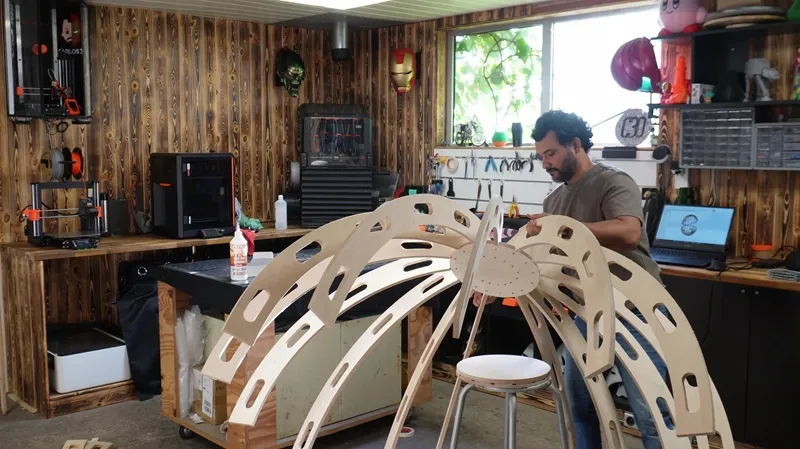
This approach allowed Reyes to move the Poké Ball from a conceptual shape to a structured assembly that could be fabricated using CNC cutting. Pre-scale validation using laser-cut models revealed critical issues early, including insufficient space inside the Poké Ball and the need for intermediate supports. These insights informed revisions before full-scale production.
Fabrication workflows for the Poké Ball were directly driven by the digital model. CNC cutting produced the primary wooden structure, while assembly relied on controlled spacing. “I used wood glue and stainless-steel screws, plus some guides to keep the spacing consistent,” note Reyes. When traditional covering approaches failed to achieve the required surface quality, Reyes adapted by designing a segmented 3D-printed shell.
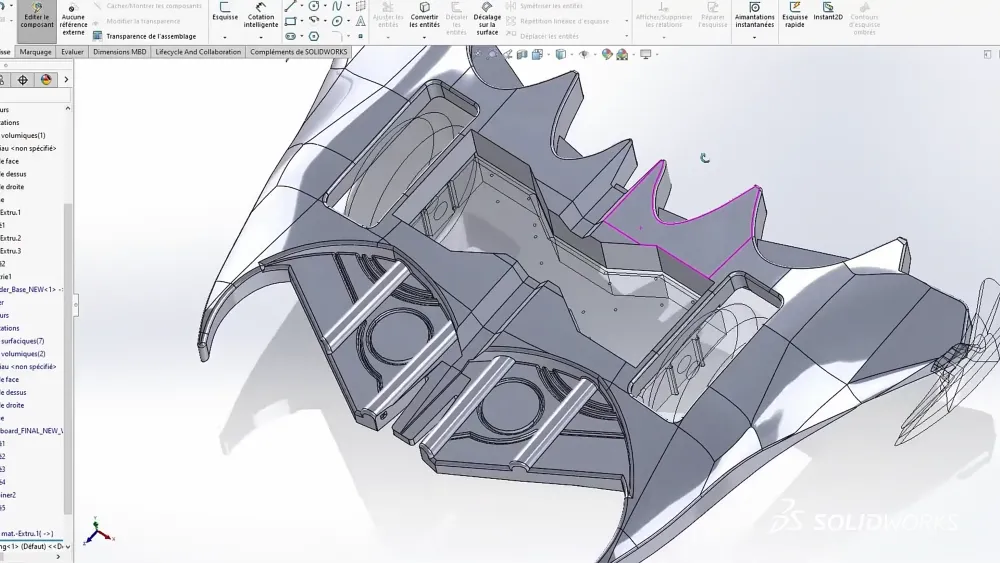
The Goblin glider project followed a similar pattern. Initial forms were created and refined digitally, enabling Reyes to sculpt complex surfaces and then translate them into printable components. He describes how he “quickly sculpted the glider’s initial form” in xShape and refined details in xDesign to move “from concept to first prototype.”

Iteration was continuous throughout both projects: Modeling informed fabrication, and fabrication constraints informed further modeling.
The primary benefit of this approach is control over geometry, fabrication, and outcomes. By structuring designs in SOLIDWORKS before fabrication, Reyes identified issues such as material behavior, fit, and spatial limitations early in the process.
Iterative prototyping reduced downstream rework. Laser-cut models exposed design flaws before CNC production. Assembly feedback informed adjustments to tolerances and structure. When initial covering strategies failed, the existing digital model enabled a rapid pivot to a 3D-printed solution without redesigning from scratch.
The ability to break large assemblies into manufacturable components supported multi-process fabrication. CNC cutting, laser cutting, and 3D printing were all coordinated from a single design source, which maintained alignment across processes.
Reyes describes his approach as, “Sometimes I break the rules. That’s important. Pushing design forward often means moving faces, deleting features, and trying things that aren’t standard.” This reflects a workflow grounded not in rigid process, but in controlled iteration.
Engineering creative concepts into physical reality requires masterful project management in how tools are used. In Reyes’ work, SOLIDWORKS Design functions as a structured environment for exploration, where ideas are tested against material, geometry, and fabrication constraints before they are built.
The result is not just visually compelling projects, but manufacturable, assembled systems that hold together under real-world conditions. That distinction is important in maker-driven engineering, where creativity and execution must coexist.
In any industry where concepts must become physical products, the ability to iterate, validate, and build with precision remains fundamental.
Innovate faster, design better & grow your career with SOLIDWORKS. Choose the industry standard 3D CAD solution trusted by professionals worldwide.
SOLIDWORKS
Discover advancements in AI CAD tools and their impact on AI product design and how this delivers real-world outcomes for SOLIDWORKS designers.
SOLIDWORKS
Discover what unified Modeling & Simulation (MODSIM) is and how it transforms product design, enabling real-time collaboration and faster innovation.
SOLIDWORKS
This guide will help you evaluate CAD system criteria such as ease of use, collaboration capabilities, data management, and scalability.
EBooks
SOLIDWORKS solutions enable you and your team to quickly transform new ideas into great products.