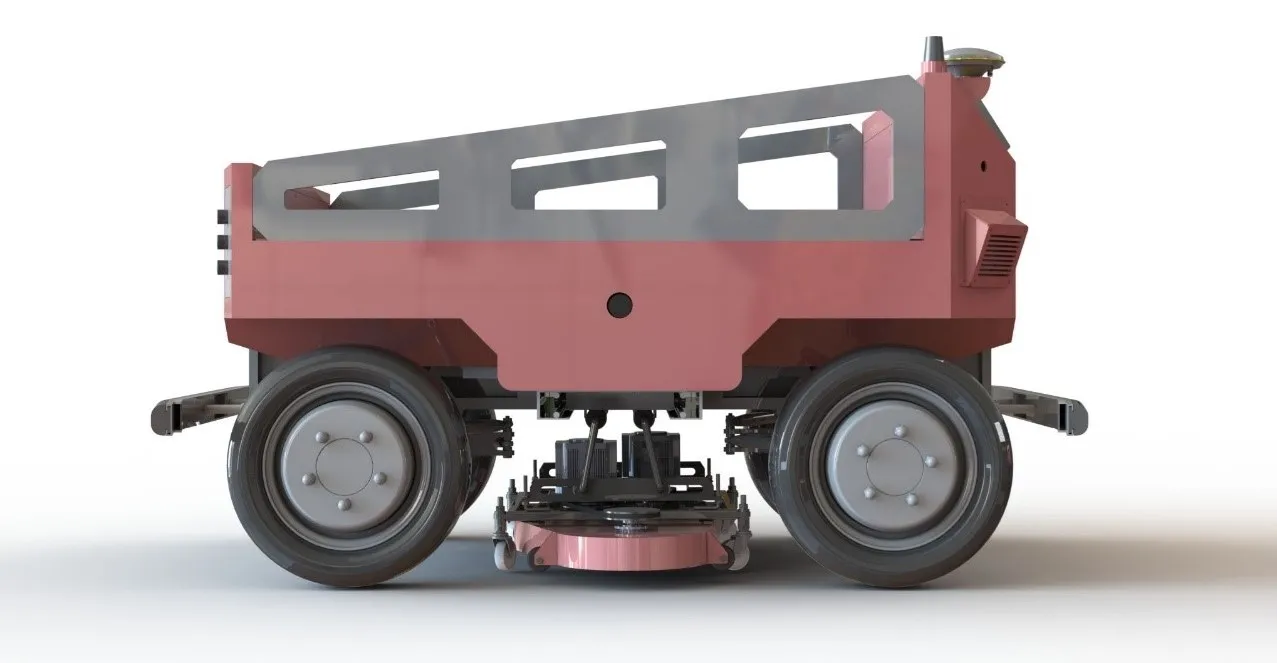
Commercializing Productivity-Enhancing AI Agricultural Robots with SOLIDWORKS Solutions
Kisui Tech is innovating self-driving AI robots equipped with interchangeable attachments for various agricultural tasks, such as grass cutting. The company uses advanced simulation and large-assembly tools from the SOLIDWORKS Extended portfolio to commercialize its technologies and bring actual products to market.
Challenge
Improve the handling of large assemblies and leverage advanced simulation tools in order to accelerate the commercialization of AI-enabled agricultural robots that enhance farming operations.
Solution
Join the SOLIDWORKS for Startups program to leverage industry-leading large assembly design, advanced simulation, and product data management (PDM) solutions, as well as improve collaboration through access to cloud-based tools on the 3DEXPERIENCE platform.
Results
- Accelerated design iterations through improved handling of large assemblies
- Minimized prototyping, saving time and money, and optimized design performance via advanced simulations
- Streamlined internal communications and collaboration with cloud-based tools on the 3DEXPERIENCE platform
- Sped up the commercialization of AI agricultural robots to enhance farming operations.
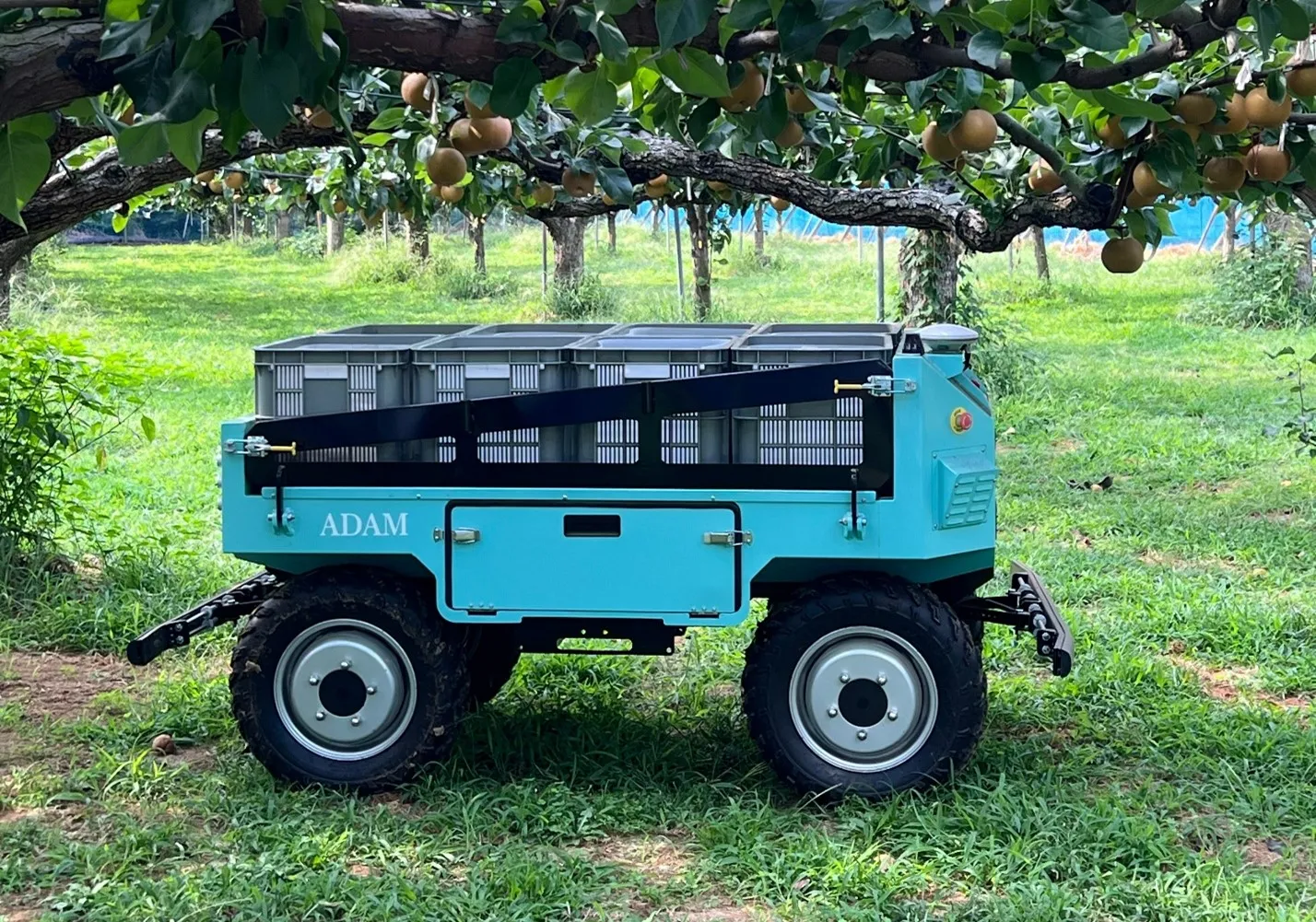
Kisui Co., Ltd. is an agri-robot company that designs, develops, and manufactures artificial intelligence (AI) agricultural robots, image recognition, and data science technologies. Based in Sendai, Japan, and founded by CEO Tamir Blum in 2021, the firm develops autonomous agricultural AI robots that are designed to enhance farming operations. The company’s platform features self-driving AI robots equipped with interchangeable attachments for various agricultural tasks, along with a digital farm management system that collects and analyzes data, enabling farmers and agricultural businesses to improve efficiency, monitor crop conditions, and optimize resource utilization. With a background in space technologies, including off-world rovers, Blum leads a team of designers and engineers that have created an AI-based automatic driving robot to help small and mediumsized farmers, primarily in the orchard farming regions of Japan, deal with significant challenges. These challenges include increasing labor shortages in agriculture, the need to reduce the amount of physical labor required, and plantation management. Kisui’s first two robots — Adam and Mini Adam — collect data to help improve the efficiency of farmers’ decision-making and management.
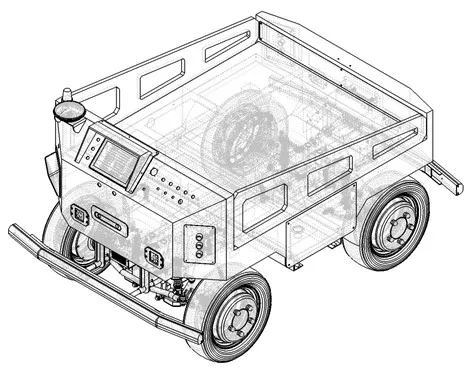
Kisui’s technology also helps in supply chain management by collecting crop and soil data through the cameras and sensors on the robots as they move around the farm. These capabilities enable data analysis, product optimization, and productivity improvements, such as early detection of pests and crop yield projections. While much of the company’s early product development was done using Autodesk® Inventor® software, Blum says Kisui needed better large-assembly design and advanced simulation tools to quickly commercialize its technologies into actual products.
“We decided to move to SOLIDWORKS® solutions and made the transition in June 2025 in order to accelerate commercialization of our products,” Blum recalls. “Our mission is empowering farmers, and outdoor industries as a whole, for a greener, brighter future. Our robot designs and assemblies are very complicated, so we needed to streamline the handling of large assemblies and subassemblies and leverage advanced simulation tools to shorten our time to commercialization. Most of the members of our mechanical team were also familiar with SOLIDWORKS, and the team pushed hard to move to SOLIDWORKS.”
Kisui standardized on SOLIDWORKS solutions by joining the SOLIDWORKS for Startups program, which allows the company to utilize the full range of SOLIDWORKS design and engineering tools, including access to cloud-based tools on the 3DEXPERIENCE® platform. The move enabled the company to complete its first distributor deliveries in late August 2025, supplying units to a sharing-service partner and a promotional partner in the Hokkaido region, and to prepare for mass production.
Saving Time through Better Large-Assembly Management
By moving to SOLIDWORKS, Kisui engineers were able to handle large assembly design of the company’s robots, including multiple subassemblies, more efficiently, saving time and accelerating the drive toward commercialization. “SOLIDWORKS design software enables smooth management of multiple subassemblies and components, improving our ability to iterate designs quickly,” notes Chief Product Officer Yu Cheng. “This has accelerated our overall product development cycle and allowed us to bring more refined prototypes to testing earlier in the process.” “We needed to streamline and reduce the number of large assembly design iterations in order to speed up our transition to mass production,” Blum adds. “The large assembly design tools in SOLIDWORKS, such as interference detection, enabled us to minimize errors and have more confidence in our design as we bring our first products to market.”
Related Resources
We decided to move to SOLIDWORKS solutions and made the transition in June 2025 in order to accelerate commercialization of our products. Our mission is empowering farmers, and outdoor industries as a whole, for a greener, brighter future. Our robot designs and assemblies are very complicated, so we needed to streamline the handling of large assemblies and subassemblies, and leverage advanced simulation tools to shorten our time to commercialization. Most of the members of our mechanical team were also familiar with SOLIDWORKS, and the team pushed hard to move to SOLIDWORKS.
Simulations Reduce Prototyping, Improve Performance
In addition to using SOLIDWORKS large assembly design tools to speed up time to market, Kisui heavily leveraged SOLIDWORKS Simulation solutions to reduce prototyping cycles, optimize product performance, and extend product durability. “Our team utilizes a range of simulation analyses, including stress in robot motion, fluid dynamics for the inner robot cooling system, and vibration studies for off-road performance,” Cheng points out. “These simulations allow us to optimize key design parameters before physical prototyping, reducing development time and increasing confidence in product performance. “By leveraging simulation tools, we have been able to reduce the number of iterative prototypes, which decreases both cost and development lead time,” Cheng continues. “SOLIDWORKS simulations have also contributed to improved product reliability, better thermal management, and optimized structural performance. These benefits have been significant across our product lines.”
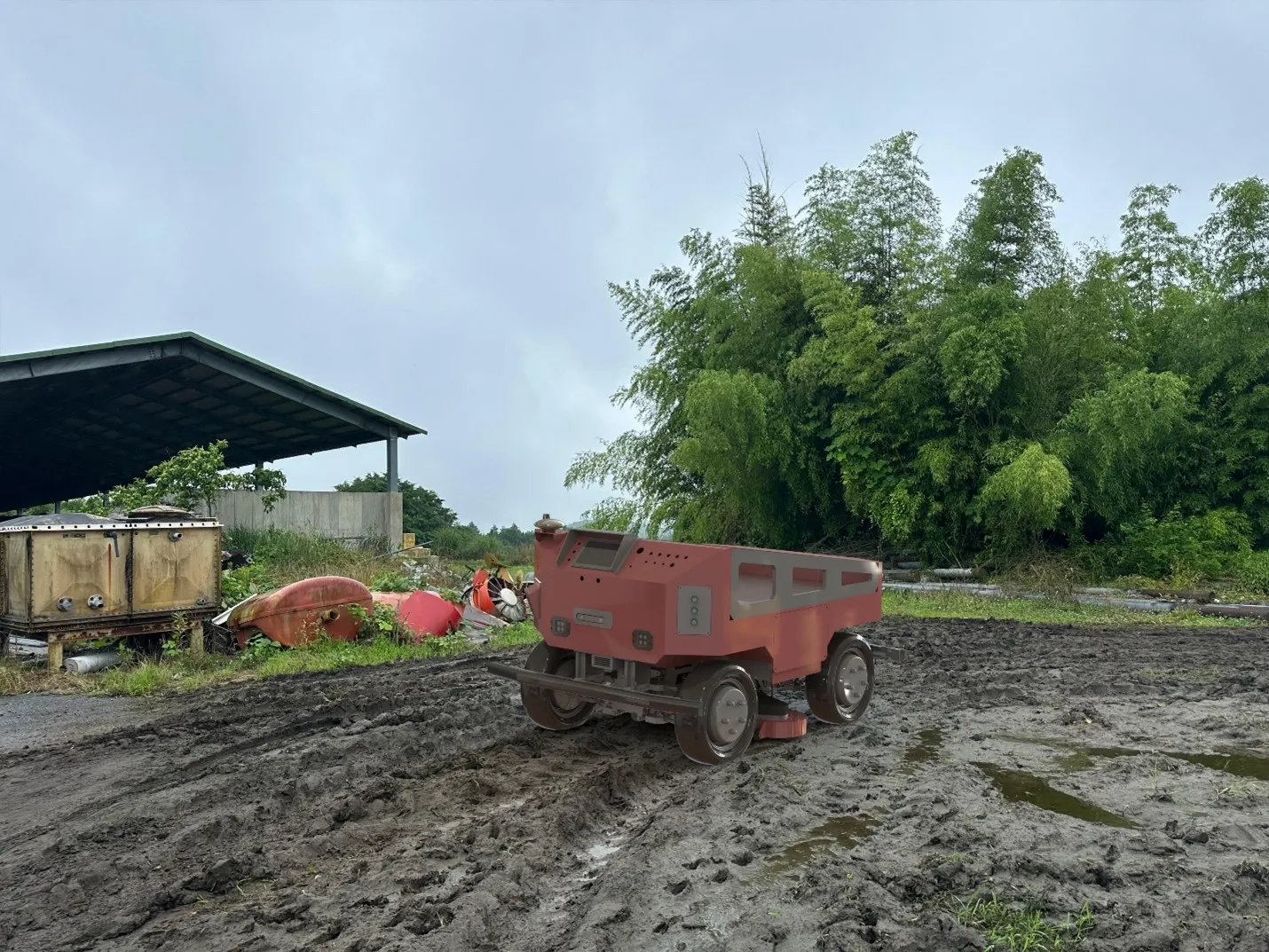
More Effective Collaboration with Cloud-Based Tools
Helping Kisui’s shortened timeline toward commercialization was the more effective communication and collaboration afforded by cloud-based tools on the 3DEXPERIENCE platform. “Through the SOLIDWORKS for Startups program, we have access to cloud-based collaboration tools via the 3DEXPERIENCE platform,” Cheng says. “Our engineering and product teams have found these tools useful for streamlining internal collaboration and improving version control across distributed teams.” “Collaboration among our software, electrical design, and mechanical design teams has been an important factor in speeding up our development,” Blum stresses. “In addition to internal collaboration, the move to SOLIDWORKS is helping us integrate and collaborate more effectively with product and manufacturing partners.”
Products:
- SOLIDWORKS for Startups
- SOLIDWORKS Design Premium
- SOLIDWORKS PDM
- SOLIDWORKS Simulation Premium
- SOLIDWORKS Flow Simulation
- 3DEXPERIENCE Platform
Learn More About SOLIDWORKS Expanded Solutions
Have questions about SOLIDWORKS Solutions?
SOLIDWORKS solutions enable you and your team to quickly transform new ideas into great products.