SOLIDWORKS for Startups Program
Industry-leading 3D design tools for hardware startups at nominal cost
SOLIDWORKS
Spacesuit developer uses SOLIDWORKS Design to model, simulate, and refine complex pressure garments for improved mobility, fit, and faster development cycles.
Design pressure garments for the harsh environments of outer space that involve mechanical complexity and unforgiving sealing requirements while prioritizing ergonomic comfort for all body types.
Leverage SOLIDWORKS Design, simulation, and other tools to digitally model and simulate, explore options, validate performance, and refine designs before committing to physical prototypes.
Spacesuit design is rarely requested of product developers. It requires integrating mechanical systems, human variables, and life-support constraints into a single functioning unit. Every component must perform reliably in an environment where failure carries immediate and potentially dire consequences.
Solosuits, a Houston-based spacesuit developer, is working to bring engineering design excellence to the next-generation suits into space. The startup’s objective is to build a functioning suit while continuously refining each component to meet strict performance, safety, and usability requirements. Within that objective the spacesuit glove presents the most concentrated spacesuit design challenge.
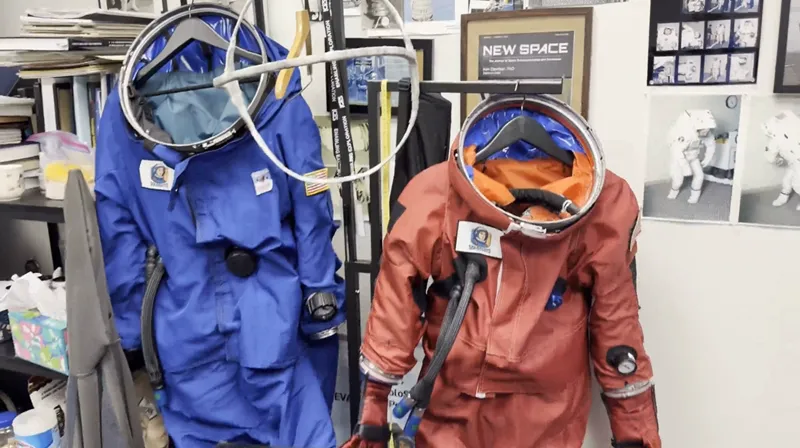
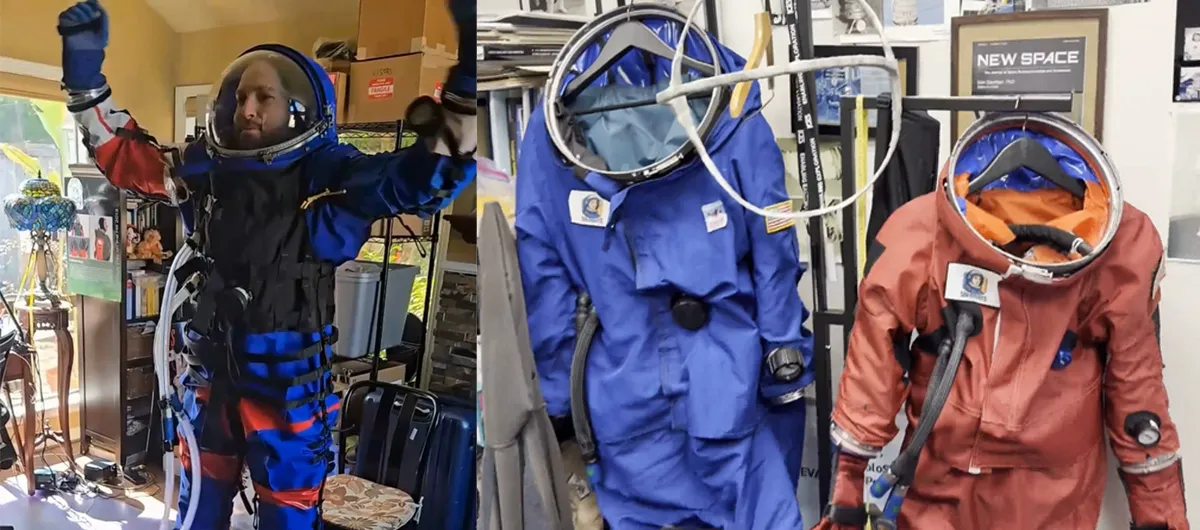
Solosuits space suit prototypes
Spacesuit gloves represent a convergence of competing engineering requirements. They must function as part of a sealed pressure system while enabling the dexterity of the human hand, which makes the glove one of the most difficult components to design. According to Solosuits lead designer Nik Moiseev, along with numerous joints and mobility mechanisms, the spacesuit glove must satisfy a long list of performance requirements shared across an entire suit. “The glove is the most difficult part of a spacesuit,” he explains.
At a functional level, the glove operates as a pressurized interface between an astronaut’s hand and the external environment, which enables motion within a sealed system while maintaining internal pressure. This creates a fundamental constraint: Internal pressure generates forces that resist joint articulation, a well-documented challenge in EVA glove design, according to NASA research. This increases the effort required for movement, which contributes to hand fatigue. A glove must therefore be engineered to retain pressure, avoid leakage, and maintain structural integrity while reducing joint torque and enabling repeatable, precise hand motion.
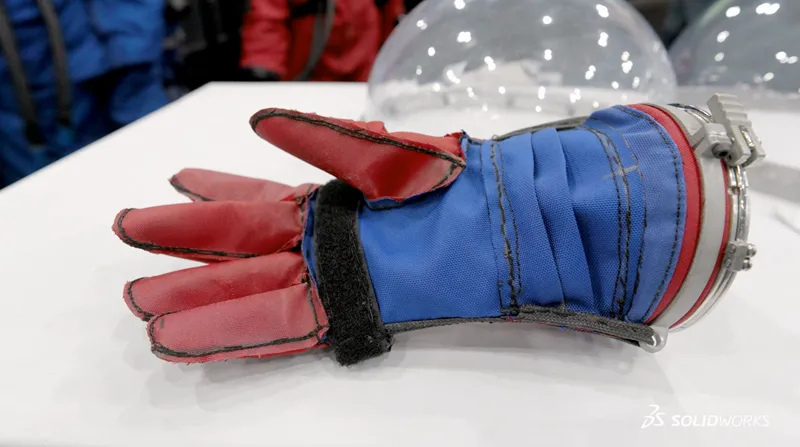
Space suit glove design prototype
This challenge is compounded by the human hand, one of the most mechanically complex and dexterous structures in the human body. As Spacesuit Engineer and Technician Artem Kozhemyakin notes, “The glove contains the highest number of small parts.” The glove also must integrate with surrounding hardware systems, including bearings, disconnects, and structural elements, all of which influence mobility and usability.
Human variability adds another layer of difficulty. The design must accommodate different astronaut physiques while maintaining consistent performance in fit, reach, and thermal and comfort requirements under extended use. These constraints define the design challenge: creating a system that, without compromise, maintains pressure and enables motion while adapting to the human body.
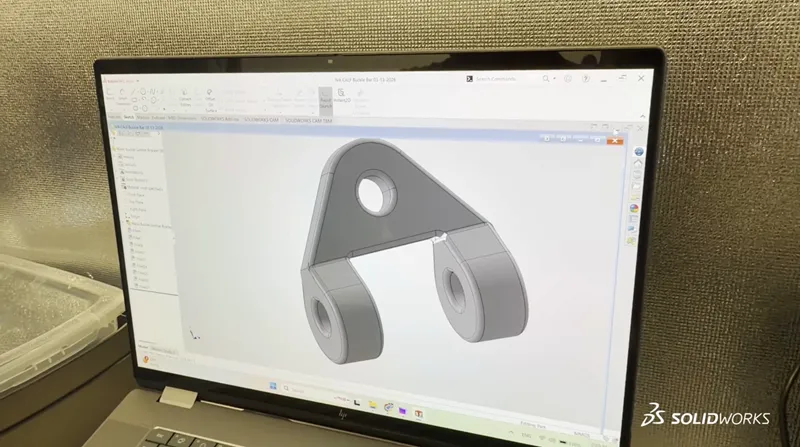
Solosuits team using SOLIDWORKS and the 3DEXPERIENCE Platform to design a revolutionary space suit
Industry-leading 3D design tools for hardware startups at nominal cost
SOLIDWORKS
Discover SOLIDWORKS Design, the industry-standard 3D CAD software with cloud collaboration, secure file management, and AI-powered features.
SOLIDWORKS
The SOLIDWORKS for Startups program enables us to model and prototype quickly without [high-end mechanical CAD] cost barriers.
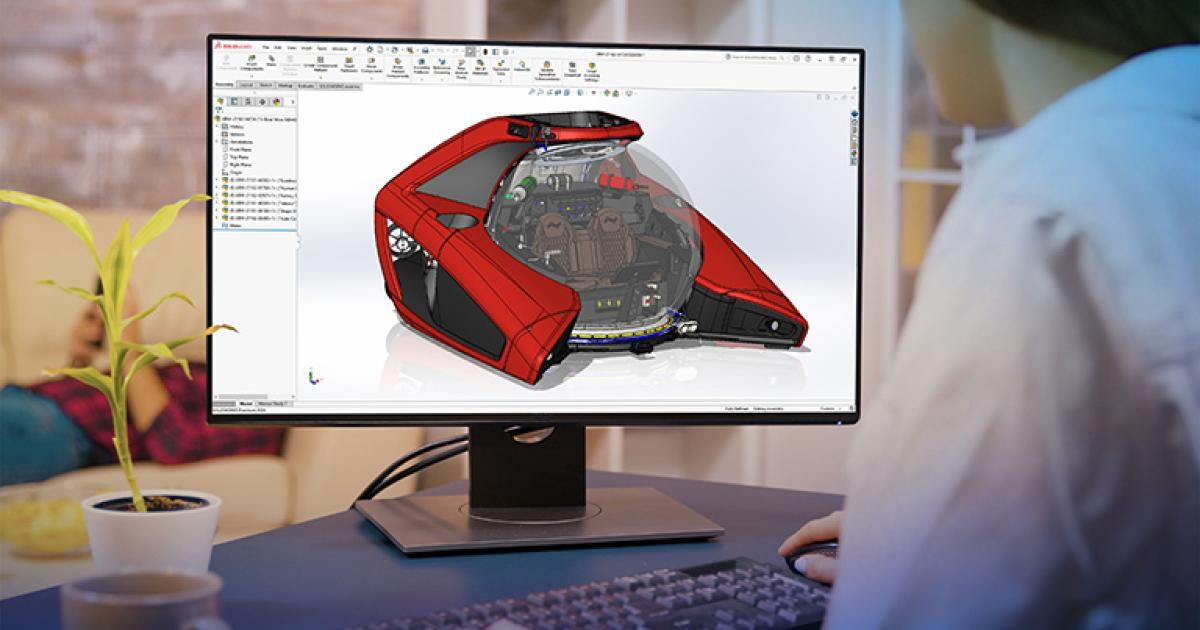
To address these challenges, Solosuits relies on 3D modeling software and uses SOLIDWORKS® Design to develop spacesuit components through a structured digital workflow. Access to capable 3D modeling tools enables the small startup company’s team to build models quickly and iterate without the cost and delay of repeated physical builds. “The SOLIDWORKS for Startups program enables us to model and prototype quickly without [high-end mechanical CAD] cost barriers,” Kozhemyakin enthuses. That means design for manufacturability is built right into the process, reducing wasted time and materials for more sustainable product development.
The ability to generate and evaluate multiple design configurations is part of the core SOLIDWORKS features and capabilities. According to Moiseev, one of the most valuable aspects of CAD software is the ability to “quickly make combinations and look for options.” This is particularly important for glove design, where minute geometric changes can affect mobility, sealing integrity, and overall usability and performance.
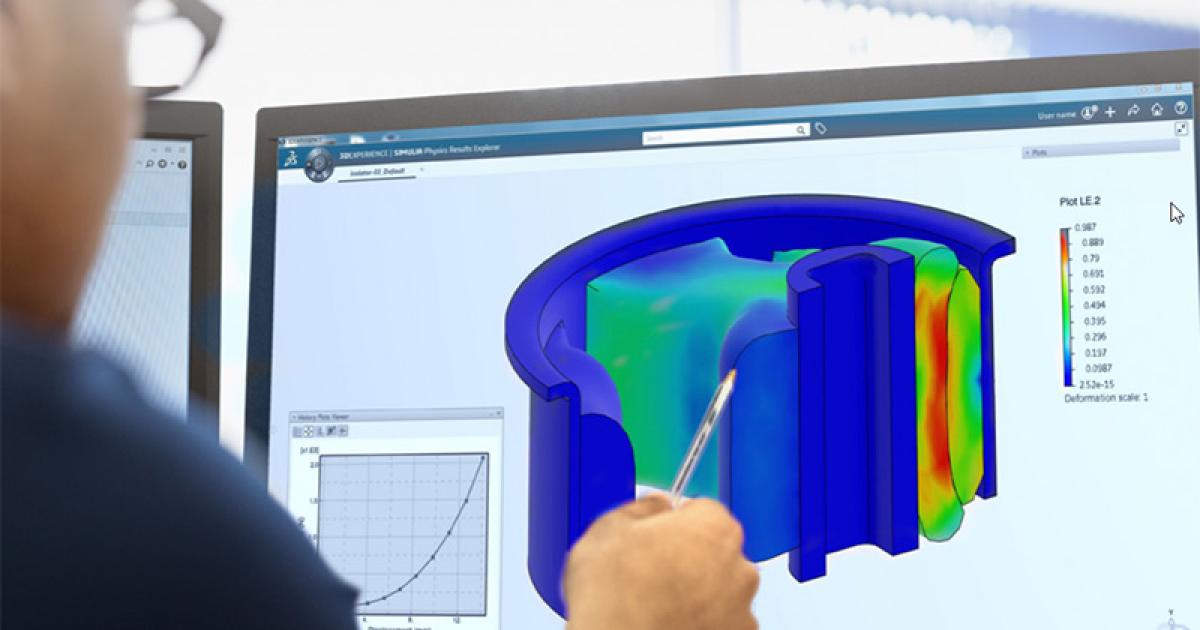
Solosuits leverages SOLIDWORKS Simulation to assess performance before hardware is produced within the product development lifecycle. By evaluating designs virtually, the team identifies potential issues early and refines components prior to fabrication, which reduces waste and supports more sustainable product development.
Equally important to achieving an innovative engineering design is the use of digital human models based on anthropometric data. (SOLIDWORKS partners with Zygote.) These models allow the team to evaluate how different body types interact with a spacesuit. While pressurization limits human mobility, a virtually pressurized system allows Solosuit engineers to evaluate fit, reach, and joint movement without relying on live humans or physical prototypes.
This combination of configuration-based design, simulation, and human-centered evaluation on digital, and later, real-life models enables Solosuits to translate complex requirements into designs that are both functional and designed for manufacturing.
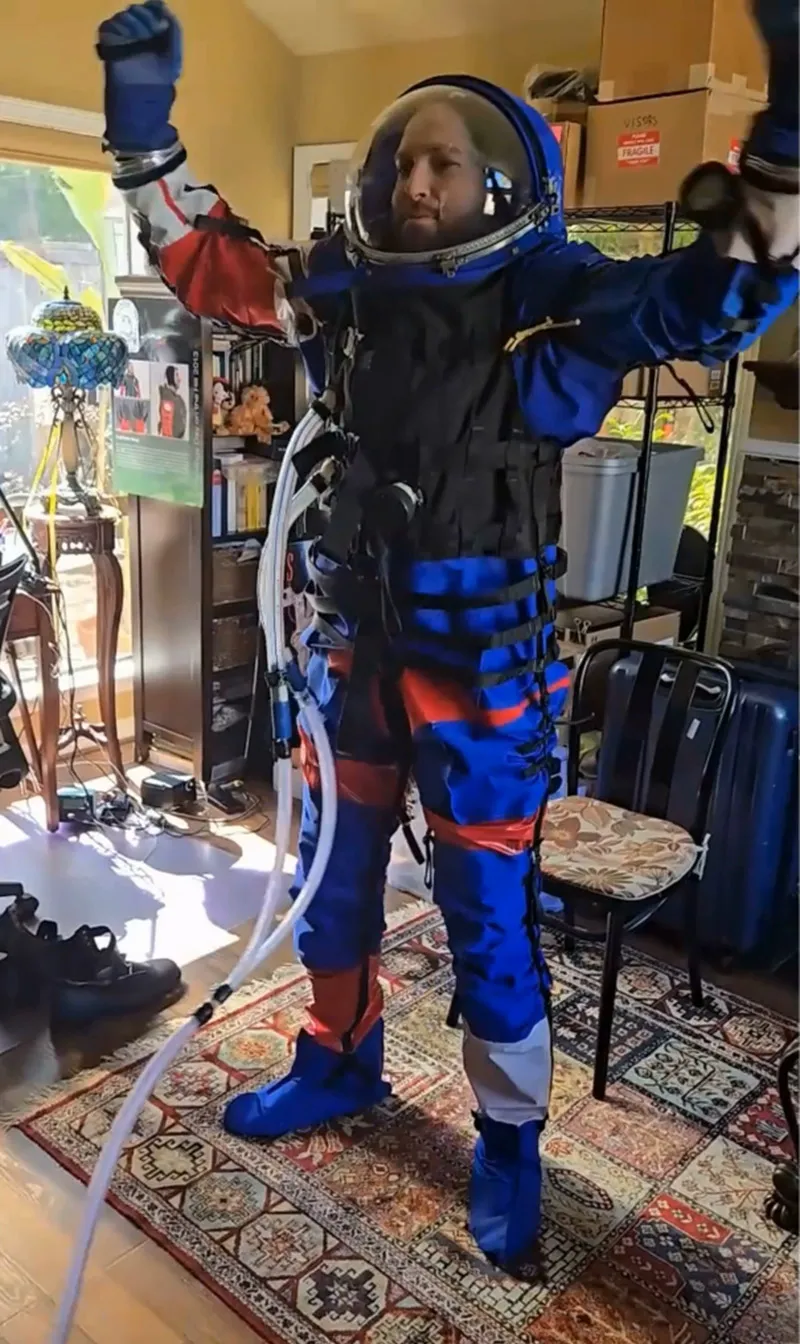
Solosuits prototype space suit testing
By shifting a significant portion of the product development lifecycle into the digital environment, Solosuits reduces its dependence on only physical prototyping. Kozhemyakin explains that the team can validate multiple designs virtually and simultaneously rather than “actually make it physically and then test it in person,” which shortens product development time.
The ability to evaluate multiple configurations in parallel accelerates iteration. Because glove performance depends on the interaction of many small components and joints, this enables more efficient refinement of mobility and sealing characteristics without repeated rebuilds.
In addition, the use of anthropometrically based human models improves ergonomic validation early in the design process. Instead of relying on a single nominal size, the team can assess how the design performs across a range of physiques, which helps identify fit, reach, and mobility constraints before physical prototypes are produced.
This approach also supports more consistent design progression over time. As Moiseev emphasizes, each new generation of designs becomes “more reliable, stronger, and more comfortable,” reflecting a product development lifecycle that incorporates iterative improvement based on simulation, configuration testing, and human-centered evaluation.
For Solosuits, designing spacesuits is fundamentally about enabling human performance in one of the most demanding environments imaginable. The challenge is not only to maintain life-support conditions, but to do so without limiting movement, comfort, or usability.
By leveraging SOLIDWORKS Design to model, simulate, and evaluate designs digitally, the team is able to approach their challenge with greater precision and efficiency to reach their goal of engineering design excellence. The result is a development process that supports continuous improvement, reduces reliance on physical testing, and inspires greater confidence in each design iteration.
As commercial space activity expands, the ability to engineer systems that balance safety, mobility, and are designed for manufacturability will become increasingly important.
Innovate faster, design better & grow your career with SOLIDWORKS. Choose the industry standard 3D CAD solution trusted by professionals worldwide.
SOLIDWORKS
Discover advancements in AI CAD tools and their impact on AI product design and how this delivers real-world outcomes for SOLIDWORKS designers.
SOLIDWORKS
Discover what unified Modeling & Simulation (MODSIM) is and how it transforms product design, enabling real-time collaboration and faster innovation.
SOLIDWORKS
This guide will help you evaluate CAD system criteria such as ease of use, collaboration capabilities, data management, and scalability.
EBooks
SOLIDWORKS solutions enable you and your team to quickly transform new ideas into great products.