What is 3D CAD Design & Modeling Software?
Discover how 3D CAD software improves precision and teamwork, and how SOLIDWORKS Design can transform your workflow.
SOLIDWORKS
Composites technology company leverages SOLIDWORKS and 3DEXPERIENCE to model, validate, and scale composite manufacturing with improved speed, control, and efficiency.
Streamline carbon fiber reinforced plastics production processes and optimize equipment to reduce energy use and development time while maintaining part quality.
Leverage SOLIDWORKS Design and the 3DEXPERIENCE platform to digitally model, simulate, and collaborate more effectively across internal teams and with customers.
Carbon fiber reinforced plastics (CFRP) are essential in applications where weight, strength, and efficiency are non-negotiable. Yet production remains constrained by slow cycle times, high energy use, and complex process control, limiting scalability. Swedish company Corebon AB identified this disconnect as a clear opportunity.
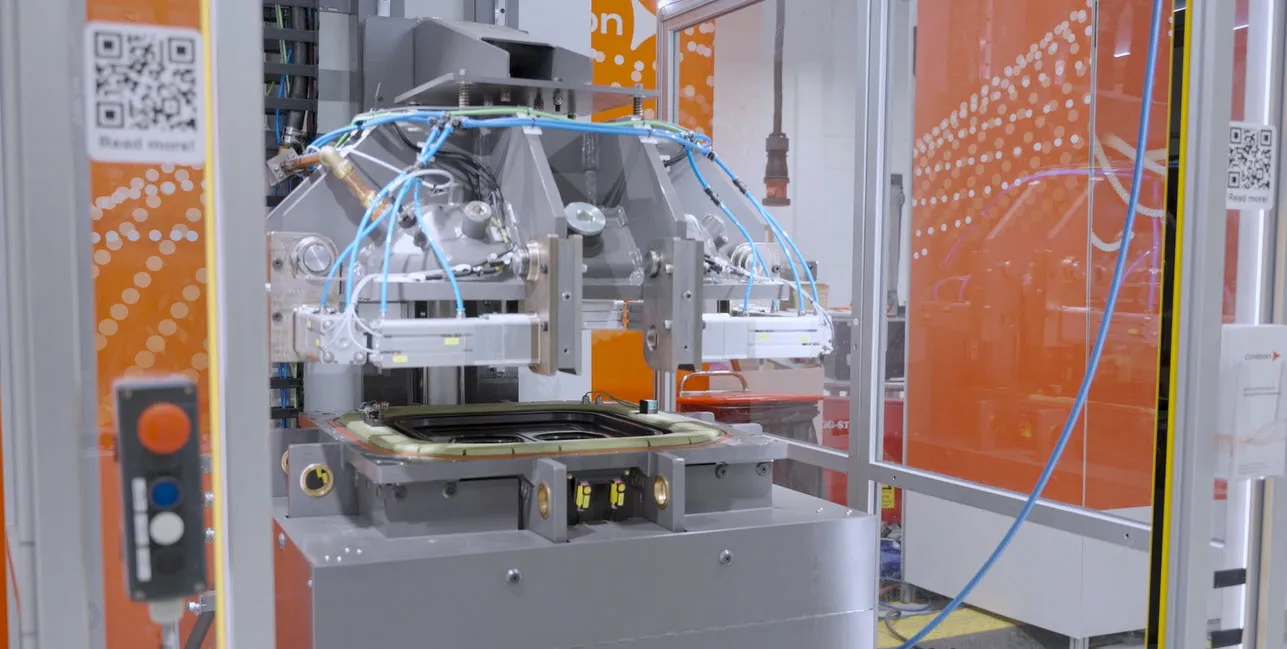
Corebon focuses on improving production efficiency in composite manufacturing through induction heating technology. Their systems enable fast, uniform heating of molds and materials, which enable manufacturers to reduce cycle times and energy use. Traditional composite manufacturing depends on ovens and autoclaves that heat large volumes of air and tooling before the material itself reaches temperature. This introduces thermal lag, uneven heating, and significant energy loss.
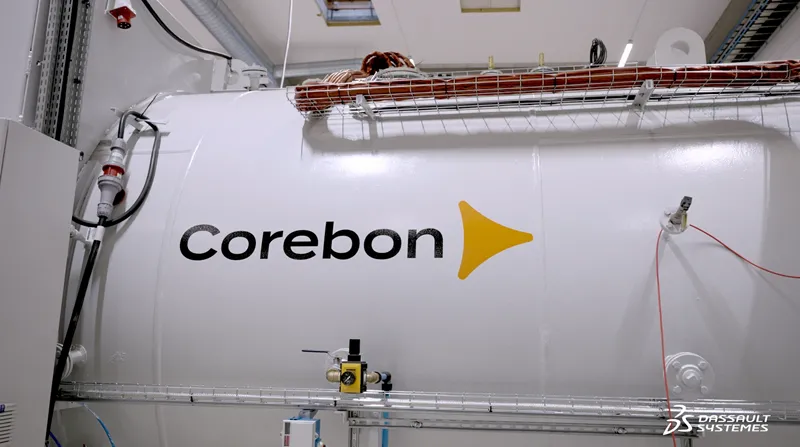
Corebon challenged the limitations of conventional composite manufacturing by replacing indirect, energy-intensive oven heating with targeted electromagnetic induction. By generating heat directly within the carbon fiber material, the process eliminates unnecessary thermal mass, accelerates cycle times, and improves temperature uniformity and control. The result is a more efficient and scalable approach to producing CFRP components.
However, as the company expanded and worked with customers across aerospace, automotive, and other industries, it needed a more structured, scalable development process.
Composite manufacturing is inherently complex. It involves precise temperature control and variable material behaviors under heat and pressure. Tooling also must maintain dimensional stability and mechanical integrity under repeated thermal and pressure cycling. According to Kenneth Frogner, Head of Research & Innovation at Corebon, “Induction heating is the key technology in our solutions that allows us to have a very fast, uniform, and efficient heating of a thin metal mold.”
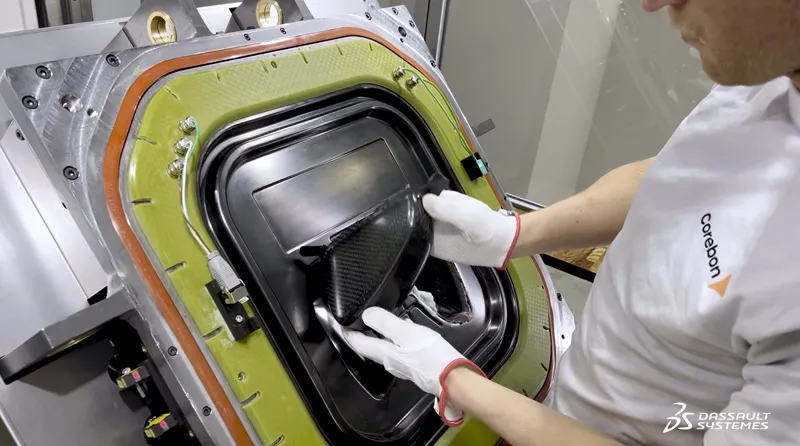
Achieving that level of control is a challenge. Each production setup requires customized tooling, heating configurations, and cooling strategies. Variations in geometry and material thickness introduce additional challenges, making it difficult to maintain uniform temperature and predictable outcomes.
At the same time, Corebon’s customers—many of them global leaders—expect faster development cycles and higher efficiency. As Rasmus Kjellstrand, Corebon Chief Commercial Officer, explains, “In order to stay competitive, [our customers] need to streamline and make their production more effective, and that's where Corebon comes into the picture.”
To meet customer expectations, Corebon needed a way to design and validate complex systems before physical implementation while also improving internal collaboration and reducing inefficiencies in their product development workflows.
Discover how 3D CAD software improves precision and teamwork, and how SOLIDWORKS Design can transform your workflow.
SOLIDWORKS
Discover SOLIDWORKS Design, the industry-standard 3D CAD software with cloud collaboration, secure file management, and AI-powered features.
SOLIDWORKS
By using digital tools like SOLIDWORKS and 3DEXPERIENCE, we are able to build digital twins of our setups, and we can optimize and predict the heating and cooling behavior.
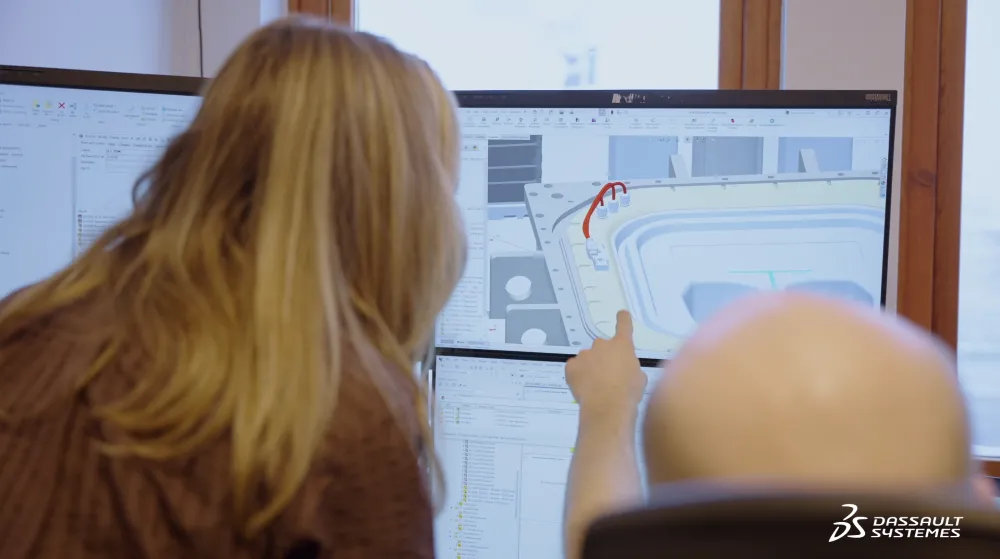
Corebon adopted SOLIDWORKS® Design and the 3DEXPERIENCE® platform to create a digital foundation for its development processes. According to Frogner, “By using digital tools like SOLIDWORKS and 3DEXPERIENCE, we are able to build digital twins of our setups, and we can optimize and predict the heating and cooling behavior.”
This capability enabled Corebon engineers to evaluate performance characteristics such as temperature distribution and cycle behavior before committing to physical builds. As a result, design decisions could be validated earlier in the process, reducing the need for physical prototypes.
Beyond modeling, the 3DEXPERIENCE platform helped address collaboration challenges. By transitioning from a traditional server-based system to a cloud-based environment, Corebon improved accessibility and coordination across teams. Charlotte Granat, Corebon Project Manager, notes, “Since we started [leveraging] 3DEXPERIENCE, it has made our life really much smoother, and we spend less time searching for information and switching between tools.”
The platform also enabled reuse of existing designs, which reduced redundant work. Kjellstrand explains, “3DEXPERIENCE has really helped us to reuse all the known designs into new customer projects, and this has really helped us to shorten time to market and streamline the development process in-house.”
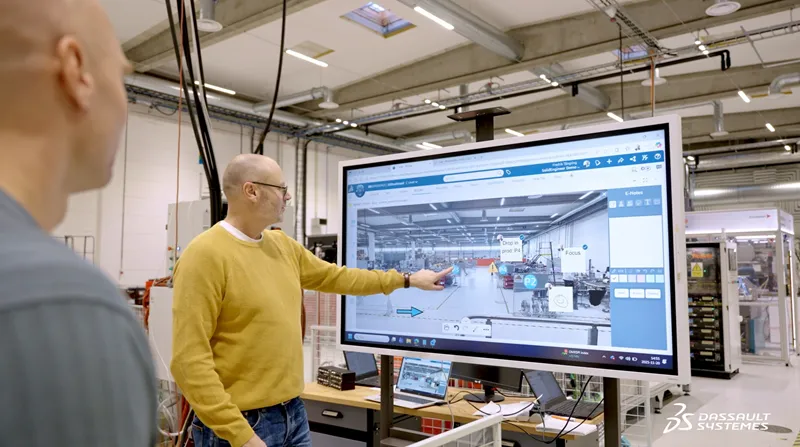
By implementing SOLIDWORKS Design and the 3DEXPERIENCE platform, Corebon established a more structured and predictable development process. For example, digital modeling enabled the team to better understand system behavior before production, which reduced uncertainty and enabled better decision-making.
The ability to reuse validated designs also significantly reduced development time. Instead of starting each project from scratch, engineers could build on prior work, accelerating the transition from concept to production. This directly supported Corebon’s goal of reducing throughput time and increasing production efficiency.
Collaboration improvements were equally important. The shift to a cloud-based platform reduced friction in accessing and sharing information, which enabled teams to work more cohesively. This also extended to customer collaboration, where shared digital models helped align design intent, process parameters, and expectations before production.
At a strategic level, these improvements supported Corebon’s broader objective of increasing production efficiency in composite manufacturing. As CEO Ola Olsson concludes, “Corebon has a huge need of digitalizing our business.” The adoption of SOLIDWORKS and 3DEXPERIENCE provided the infrastructure to support that transition.”
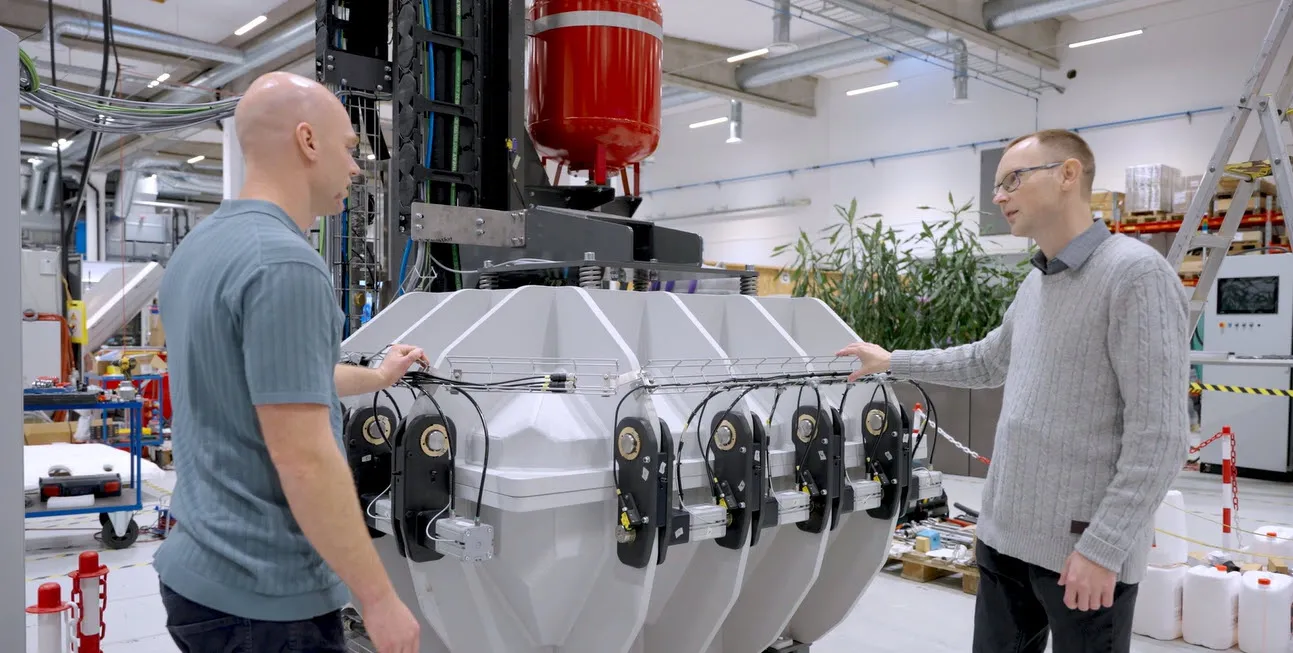
By implementing SOLIDWORKS Design and the 3DEXPERIENCE platform, Corebon established a digital workflow that supports more predictable engineering outcomes, faster development cycles, and improved collaboration. The result is a more disciplined approach to innovation, where complex manufacturing systems can be developed with greater confidence and efficiency.
Innovate faster, design better & grow your career with SOLIDWORKS. Choose the industry standard 3D CAD solution trusted by professionals worldwide.
SOLIDWORKS
Discover advancements in AI CAD tools and their impact on AI product design and how this delivers real-world outcomes for SOLIDWORKS designers.
SOLIDWORKS
Discover what unified Modeling & Simulation (MODSIM) is and how it transforms product design, enabling real-time collaboration and faster innovation.
SOLIDWORKS
This guide will help you evaluate CAD system criteria such as ease of use, collaboration capabilities, data management, and scalability.
EBooks
SOLIDWORKS solutions enable you and your team to quickly transform new ideas into great products.