Manufacturing ERP Software Systems from DELMIAWorks
DELMIAWorks Manufacturing ERP solves your manufacturing challenges, increases efficiency, eliminates downtime and enhances productivity with a single system.
DELMIAWorks
Discover the benefits of discrete manufacturing ERP systems and how it streamlines operations, enhances productivity, and drives strategic growth
If you’re in the discrete manufacturing business, you’re well aware of how many moving parts are involved in the process, from sourcing raw materials and managing budgets to staying on schedule and meeting customer demand.
There’s a lot to keep track of, and that’s why so many in the industry are turning to discrete manufacturing ERP software.
Below, we’ll discuss how this software is transforming the industry and the ways in which it can benefit your own discrete manufacturing business.
You’ve likely heard of traditional Enterprise Resource Planning (ERP) software, which is a comprehensive business management system that consolidates data from various departments into a single centralized platform, providing a holistic view of all your operations.
Discrete manufacturing ERP software is essentially an industry-specific version of this technology, designed for manufacturing companies that produce individual parts or products. This software offers real-time visibility into the entire production process, from inventory management to quality control, helping to optimize workflows, improve efficiency, and reduce costs.
Download The Ultimate Guide to Manufacturing Software to identify the best possible business partner that can help you increase the efficiency and profitability of your manufacturing organization.
Like traditional ERP software, discrete manufacturing ERP solutions include features that manage accounting and finance, human resources, and sales, plus additional features to accommodate specific manufacturing needs.
Some key features of this software include:
Many modern manufacturing operations have moved away from manual tasks and now rely more heavily on technology and automation. While these advancements can improve productivity and efficiency, they’re only helpful if you know how to properly monitor and incorporate them into your business processes.
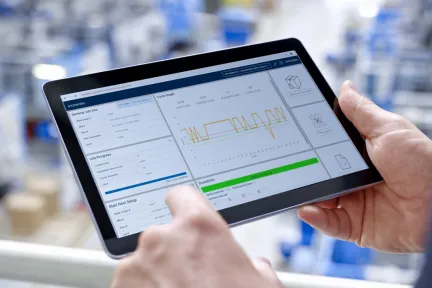
That’s where a discrete manufacturing ERP solution can help. This software keeps track of all your manufacturing technology, ensuring it’s running smoothly while accurately monitoring your operations and delivering actionable metrics, insights, and analytics. It also consolidates all this information into a single platform, allowing you to easily oversee and manage every aspect of your operations, from your accounting department to your shop floor.
While discrete ERP systems have many features, some of the key components include those associated with inventory management, production planning and scheduling, and quality control.
Inventory management involves monitoring and tracking your raw materials and finished products so that you can manage orders, optimize inventory levels, and avoid expensive stockouts.
When it comes to your inventory, there should be no surprises. ERP systems help you understand what stock you already have on hand and what materials you need to ensure you stay on schedule, provide on-time deliveries, and meet customer demand.
Discrete ERP software takes into account every aspect of your business to manage and determine data-driven plans and schedules.
For example, the software can look into machine availability, labor resources, and inventory levels to establish accurate timelines and set reliable expectations. It can also identify potential bottlenecks or setbacks, like delayed materials or rush orders that could disrupt the schedule, and pivot accordingly.
Discrete manufacturing software assists with quality assurance and risk mitigation, too. The technology can trace materials and products anywhere in the production cycle, automate inspections, and monitor compliance. The platform can also streamline audits, detecting potential issues and addressing them before they become bigger problems.
The good news is that there are all kinds of discrete ERP applications available. It’s just a matter of finding the one that suits your unique business needs.
The discrete ERP software that’s right for one business may not be right for another, so it’s important to analyze your specific business operations to select a system that will address your needs.
When shopping for a solution, ask yourself these questions:
With a better understanding of your business needs, you can begin evaluating different vendors. When narrowing down your options, consider some of the following criteria:
Discrete manufacturing ERP systems are dynamic and flexible, providing a wide range of solutions for businesses in the manufacturing industry.
Many different discrete manufacturing businesses can benefit from this technology.
For instance, a medical equipment manufacturer might use an ERP system to monitor quality control and inspections to ensure its products meet FDA requirements. This software could also help in the event of a recall, allowing the business to trace and test contaminated inventory.
An automotive manufacturer is another example of a company that could employ discrete ERP software. It could use the BOM management tools to account for all vehicle components and determine assembly sequencing to enhance efficiency.
Furthermore, an electronic manufacturing business might use this technology to help procure raw materials, track stock levels, and monitor orders. This information would help the business anticipate and prepare for any changes in supply and demand.
Countless leading manufacturers have adopted DELMIAWorks ERP solutions and experienced success stories.
For example, SAY Plastics Inc. achieved nearly 100% on-time delivery rates, while Innovation Packaging (IPack) increased its revenue by 30% and decreased inventory management costs by 5 to 10%. Other manufacturers reported an increase of product availability by 50%, up to 70% decreases in maintenance costs, and 95% cuts in expedited freight costs.
DELMIAWorks ERP software can help transform the way you do business.
DELMIAWorks Manufacturing ERP solves your manufacturing challenges, increases efficiency, eliminates downtime and enhances productivity with a single system.
DELMIAWorks
DELMIAWorks customers reduce inventory costs, eliminate downtime, control quality, automate their plant floors and gain visibility throughout their supply chains
DELMIAWorks
DELMIAWorks Manufacturing Execution System increases visibility into every aspect of your manufacturing operation, resulting in reduced errors, increased productivity & more.
DELMIAWorks
See how DELMIAWorks (formerly IQMS) customers are using our ERP & MES software to improve efficiency and profitability throughout their organization.
DELMIAWorks
Access brochures, case studies, testimonial videos, whitepapers, eSeminars (Webinars On-Demand), and more.
Online community of DELMIAWorks users (3DEXPERIENCE Platform login credentials required)
Learn more about DELMIAWorks Software Training Programs and Solution Consulting Services.

DELMIAWorks solutions solve your manufacturing challenges by connecting the entire design to manufacture process.