In the realm of demand-driven manufacturing, where manufacturers must consistently do more with less, real-time visibility to information from the shop floor is imperative.
White Papers
Quality problems cost manufacturers millions of dollars every year in scrapped materials, rework, and lost customers. You already know that consistent quality drives customer satisfaction and repeat business. Statistical process control (SPC) is one way to achieve this.
So, what is statistical process control and how does it prevent quality issues? Let’s learn more about how this methodology turns your production data into actionable insights that help you make smarter decisions about your processes.
SPC is a method that uses statistical techniques to monitor and control manufacturing processes in real-time. It helps you identify variations in your production processes before they result in defective products or costly downtime.
SPC analyzes data from your production line to determine when processes are operating normally and when they need adjustment. You can apply these principles to track everything from the temperature in your furnaces to the dimensions of parts coming off your assembly line. Manufacturing companies use SPC to monitor machining operations, assembly processes, and quality inspections.
Learn why real-time monitoring is the glue that keeps production operations together to enable business continuity and resiliency.
The definition of statistical process control and how it’s used hasn’t always been the same. Walter Shewhart developed the foundations of SPC at Bell Telephone Laboratories in the 1920s while working to improve the reliability of telephone systems.
During World War II, the U.S. military adopted quality statistical process control to improve its weapons and equipment. W. Edwards Deming later brought SPC principles to Japan in the 1950s, where companies like Toyota used them to build world-class quality management systems. The success of Japanese manufacturers in the automotive and electronics industries during the 1970s and 1980s led to American companies also embracing SPC.
SPC provides manufacturers with tools to consistently produce high-quality products while reducing costs and improving efficiency. Let's explore the specific statistical process control benefits that make it such a valuable investment for manufacturing operations.
SPC helps you catch quality problems before they reach your customers. When you monitor your processes in real-time, you can make adjustments immediately rather than discovering problems during final inspection or, worse, after shipment. This proactive approach to quality control and management means fewer customer complaints, returns, or warranty claims, plus higher customer satisfaction and stronger relationships that lead to repeat orders and referrals.
Manufacturing waste eats into your profit margins through scrapped materials, rework, and inefficient use of labor and equipment. SPC identifies the root causes of variation in your processes, allowing you to address problems that create waste before they impact your production runs. One of the biggest SPC benefits is improvements in material utilization and labor productivity, which translate directly to better margins and higher profitability.
SPC gives you the data you need to optimize your production processes for maximum throughput and minimum downtime. You'll be able to identify bottlenecks, understand capacity constraints, and make informed decisions about where to focus improvement efforts. This level of process visibility helps you meet production commitments more consistently while maximizing return on investment (ROI).
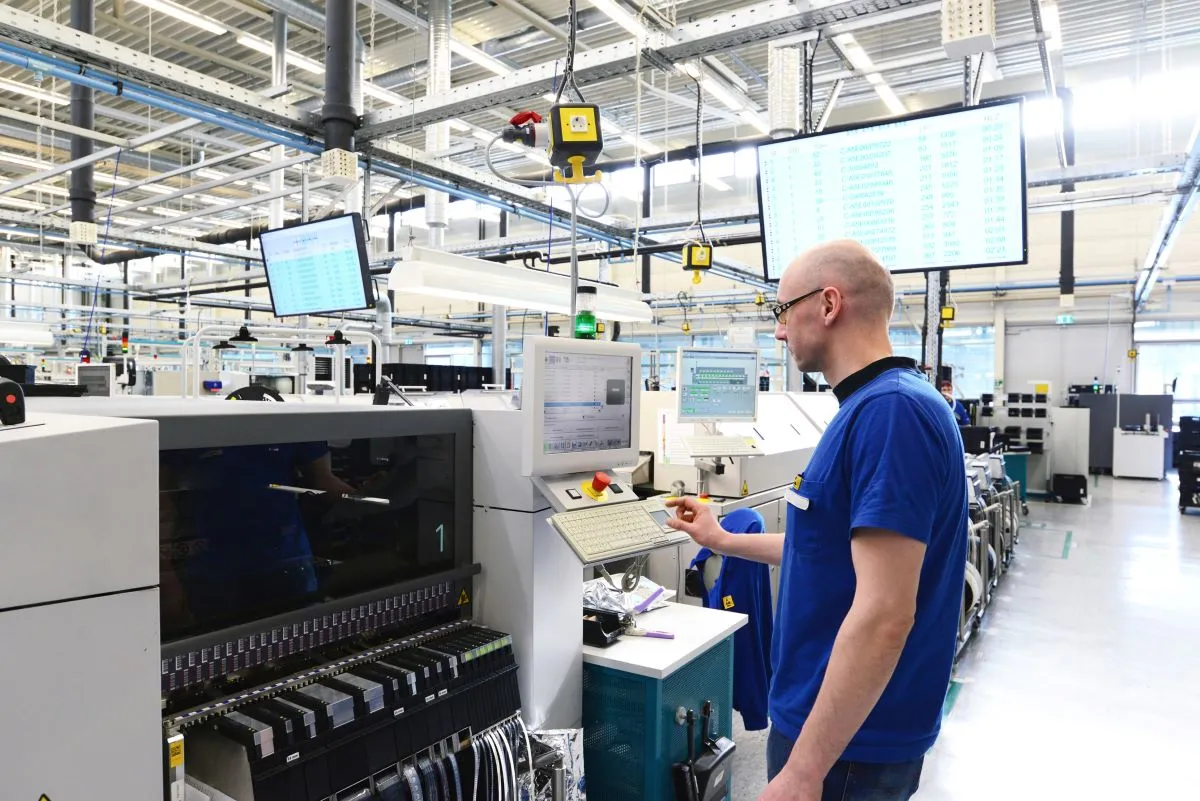
To really understand the definition of SPC, you need to know about the fundamental components. Understanding these core elements will help you collect the right information, analyze it effectively, and make informed decisions about your operations.
You can't manage what you don't measure. That’s why data forms the foundation of every SPC system. Measurements can be individual values taken from single products or averaged values calculated from a set of readings taken over time, and you'll work with two main types of data:
Analysis transforms your raw data into actionable insights that help you understand what's happening in your processes and why. SPC uses several proven tools to help you visualize patterns, identify root causes, and give you a complete picture of your process performance. The most common examples of statistical process control tools include:
So how does quality statistical process control actually help you make better decisions? It’s all about variability. SPC helps you distinguish between different types of variation so you know when to adjust your processes and when to leave them alone:
It’s always best to prevent quality problems, rather than having to react to them. Companies that delay SPC implementation often find themselves struggling to catch up with competitors who have already built quality advantages into their operations. But introducing statistical process control software and processes into your operations comes with challenges:
We’ve talked about what SPC is today. But what about the future? Modern manufacturing is moving toward smart factories where SPC integrates seamlessly with advanced technologies like IoT sensors, machine learning, and cloud computing. Real-time data collection from connected machines provides immediate feedback on process performance, allowing you to respond to quality issues within minutes rather than hours or days.
Meanwhile, machine learning algorithms are making SPC even more powerful by identifying subtle patterns in your process data that traditional methods might miss. Something as simple as 4 data points trending in the same direction may indicate an underlying problem even before data points go outside of acceptable ranges. Machine learning can automate identification of these trends, improving responsiveness and avoiding quality issues. Predictive analytics can even forecast when processes are likely to drift out of control, so you can take preventive action before quality problems occur. These advanced SPC examples are the next level for manufacturers: predictive quality control that prevents problems rather than just detecting them.
Answering the question “What is SPC?” requires more than just understanding the concepts. You’ll need SPC software that integrates seamlessly with your existing operations and provides current insights into your processes.
DELMIAWorks offers SPC solutions designed specifically for manufacturers who want to streamline their operations while improving quality and profitability. Our integrated SPC modules work directly with our enterprise resource planning (ERP) solution, offering real-time control charts and capability analyses without requiring separate software systems or manual data transfer.
In the realm of demand-driven manufacturing, where manufacturers must consistently do more with less, real-time visibility to information from the shop floor is imperative.
White Papers
Getting your manufacturing information, data and reports in real time is crucial to the growth and success of your manufacturing facility.
White Papers
MES solution selection guide answers common questions associated with selection of a new system.
White Papers
DELMIAWorks SPC software tracks the quality of manufacturing parts on the plant floor allowing for the immediate input, analysis and statistical charting
DELMIAWorks
DELMIAWorks solutions solve your manufacturing challenges by connecting the entire design to manufacture process.